
Bağlama and Technique
Bağlama Guide for Beginners
Posture, plectrum grip, first tuning, basic fret practice, and a daily practice plan for those learning bağlama from scratch. A step-by-step roadmap that keeps motivation alive.
- bağlama
- beginner
- learning
- practice
- technique
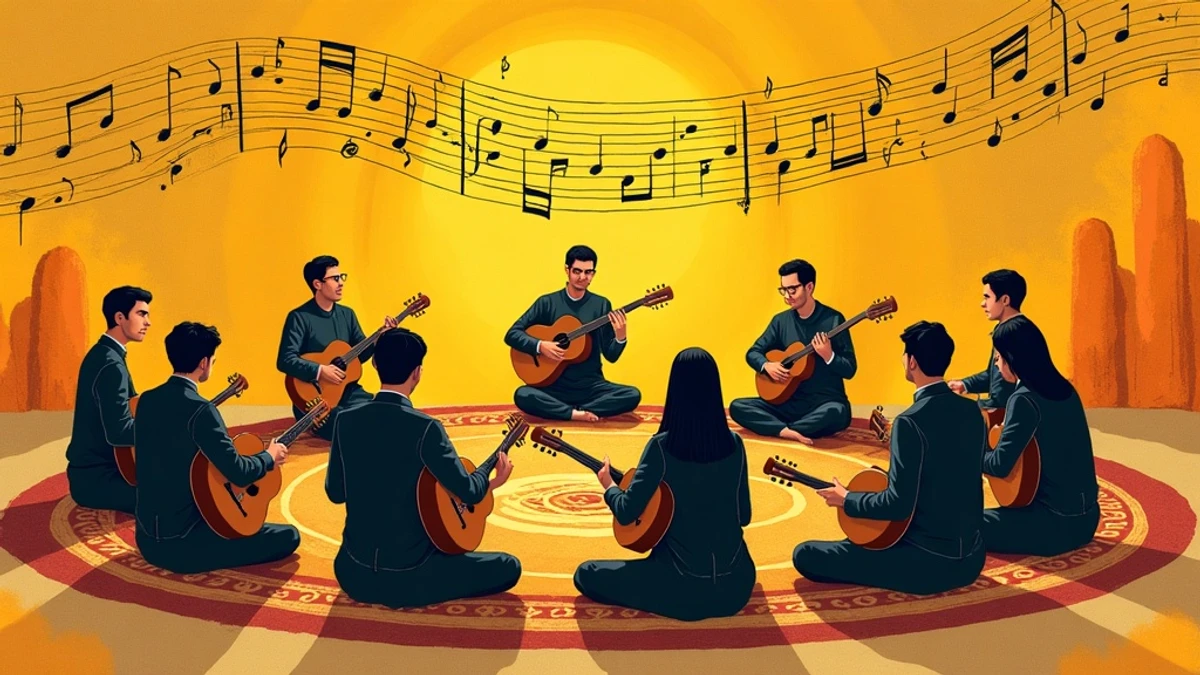
Where to start learning bağlama?
Learning bağlama is a journey that requires patience and regular practice. The first step is acquiring the right instrument and basic accessories: a tuner, peg wrench, plectrum, and carrying case. Next comes learning posture and plectrum grip; if bad habits form early, they are harder to correct later. Taking the first few lessons from a teacher or experienced player makes a big difference when possible.
Clarify your goal: do you want to play only a few folk songs, or move toward bozlak and deyiş repertoire in the long term? This decision affects instrument choice. Short-neck bağlama suits most beginners. In the first weeks, twenty to thirty minutes of daily regular practice is more effective than one long session per week.
Posture, plectrum grip, and hand position
Sit upright when playing bağlama; the instrument should rest balanced on your knees or on a bağlama stand. The right hand holds the plectrum; wrist and arm should be relaxed, avoiding unnecessary tension. The plectrum can strike the strings straight or at a slight angle; a medium angle is usually suitable at the start. Left-hand fingers should be rounded and firm on the fretboard; the thumb supports from behind the neck.
Press with the fingertips; pressing with the side of the finger does not give a clear sound. Sliding fingers along the fretboard instead of lifting them can create fluency in some passages; this technique develops over time. Recording your hand position in front of a mirror or with a phone camera helps you notice mistakes.
Right and left hand coordination
The right hand carries rhythm, the left hand melody. Practice slowly with a metronome at the start; speed comes later. Single-hand exercises strengthen coordination: first melody with the left hand, then rhythm with the right, then combine.
First tuning and choosing a tuning
Check tuning before every practice session. La karar tuning suits most beginner folk songs. With a tuner, bring the lower and upper strings to La and the middle strings to Re. Turn the peg slowly; sudden movement can break a string. After tuning, play light strokes with the plectrum for a few minutes so the strings settle.
Consult your teacher or repertoire when choosing a tuning. Learning the concept of karar (tonic) helps you understand why certain tunings are preferred. You can move to Re and Mi karar tunings in later months; first establish a solid foundation in La karar.
Basic fret and exercise practice
Fret exercises build muscle memory. Slowly move up and down a single string; hear each note clearly. Then practice simple scale patterns. Using a metronome develops your sense of rhythm; sixty beats per minute is enough at the start.
Start with short melodies: learn the main motifs of familiar folk songs such as Az Giderim Uz Giderim piece by piece. Progressing by ear and repetition without reading notation is common in folk music. Copy pitch and rhythm by listening to recordings; then practice at your own pace.
Creating a daily practice plan
An effective practice plan can be divided into four blocks: tuning and warm-up, technical exercises, repertoire work, and free playing or listening to recordings. Each block can last five to ten minutes. Thirty minutes of focused practice is more productive than two hours of scattered playing.
Set weekly goals: concrete targets such as learning the chorus of one folk song this week keep motivation alive. Noting your progress lets you look back and see how far you have come. Remembering that masters like Aşık Veysel matured through years of work supports patience.
Common practice mistakes
Starting too fast, playing out of tune, and neglecting plectrum grip are the most common mistakes. Playing slowly and correctly is always better than playing fast and incorrectly. If you feel body pain, take a break; tension ruins technique.
Teacher, resources, and community support
Online video lessons are useful but cannot replace one-on-one correction. Local courses, bağlama communities, and muhabbet gatherings provide live feedback. Listening to others speeds up ear training.
On platforms like Saz Söz you can find folk song lyrics and repertoire resources. Following lyrics while listening to recordings makes memorization easier. Joining group sessions is the most enjoyable way to share what you learn.
Expectations after the first month
In the first month you can aim for a tuning habit, basic plectrum stroke, and a few simple melodies. In three months, playing the main section of several folk songs is a realistic goal. Those who want to try bozlak openings after six months may consider long-neck bağlama.
Everyone learns at a different pace; do not compare yourself to others. Regular short practice gives more lasting results than long intervals of intense work. The bağlama journey is lifelong development; taking solid first steps is the foundation of all later progress.
The Turkish folk music tradition has been built on oral transmission and live performance for centuries. For this reason, theoretical knowledge and practical experience should progress together. Every detail you hear while playing bağlama or singing folk songs strengthens your ear memory and musical intuition. Listening to recordings, joining muhabbet gatherings, and getting feedback from a master player when possible accelerate the learning process. Patient and regular practice always yields more lasting results than short bursts of enthusiasm.
Different variants of the same folk song can be found in different regions of Anatolia; this diversity is the richness of folk music. Rather than seeking a single correct version, it is important to respect regional differences and shape your own performance consciously. Recordings by masters such as Aşık Veysel, Neşet Ertaş, and Pir Sultan Abdal are valuable references for learning both technically and emotionally. By listening actively to these recordings, you can grasp accent, breath, and phrasing structure.
Bağlama tunings, karar pitch, and tuning knowledge are complementary topics. In each La, Re, and Mi karar tuning, string tension and interval spacing differ; for this reason, planning tuning when choosing repertoire makes performance easier. Short-neck bağlama suits daily practice and mid-range folk songs, while long-neck bağlama offers advantages in bozlak and forms with wide melismas. Cura is a valuable complement for thin-toned accompaniment and high-pitched pieces.
When building repertoire, consider both your technical capacity and your audience. Learning a small number of pieces in depth is more valuable than many half-memorized ones. In group performances, a shared list, tuning compatibility, and rehearsal discipline are keys to success. In individual practice, establishing a routine of metronome, recording, and regular repetition makes progress tangible.
The muhabbet tradition and the poet tradition form the social dimension of folk music. A folk song is not only sound but story, belonging, and shared emotion. Preserving this tradition in the digital age is possible by sustaining live performance and learning from correct sources. Each generation keeps the tradition alive by adding its own interpretation; what matters is respect, patience, and continuity.
Conclusion
Learning bağlama as a beginner is possible with the right instrument, regular practice, and good habits. Posture, plectrum grip, and tuning are the foundation of every session. Short-neck bağlama and La karar tuning are a suitable starting point for most students. Thirty minutes of daily focused practice, weekly concrete goals, and teacher support when possible speed up the process. Be patient; masters like Aşık Veysel and Neşet Ertaş also started from zero one day. A good foundation opens the door to a solid musical journey you will enjoy for years.
Frequently asked questions
At what age can bağlama be learned?
Any age at which you can physically hold the instrument is suitable. Short-neck and light models are preferred for children. There is no age limit for adults; it can be learned at any age with regular practice.
How much should I practice daily?
Twenty to thirty minutes a day is enough for beginners. Focused and regular practice is better than long but scattered sessions. Take a break if you feel physical fatigue.
Can bağlama be played without reading notation?
Yes. Ear training, repetition, and listening to recordings are common methods in Turkish folk music. Reading notation is helpful but not required.
What should I learn as my first folk song?
Familiar folk songs with simple melody and repetitive structure are suitable. Your teacher or resources can suggest pieces appropriate to your level.
Should I start with short-neck or long-neck?
Most beginners should start with short-neck. Fret spans are narrower and the grip is easier. Long-neck can be added later.
Should I take online or in-person lessons?
Both are useful. In-person lessons are ideal for correcting hand position. Online resources support home practice. A hybrid approach is best when possible.